Muscle recovery: does waiting too long after a workout put you at a disadvantage?
Hello, Orvane here.
No: waiting a little while after your workout won’t impair your muscle recovery, as long as your nutrition and rest are adequate.
The famous recovery window isn’t a countdown. What matters most is eating well throughout the day, sleeping, and giving your body time to recover.
What to do right away
- Drink according to your thirst and gradually increase your intake if you’ve sweated a lot.
- Have a complete meal with a source of protein and carbohydrates in the hours that follow.
- Aim for around 20 to 40 g of protein at your meal, depending on your build and needs.
- Allow for appropriate muscle rest based on the intensity of your workout, rather than doing another maximal-effort session targeting the same muscles.
- Monitor your fatigue and performance: a sustained decline means it’s worth adjusting your training load and sleep.
To avoid the most common pitfalls, also check out these tips on mistakes to avoid after exercise and on ways to speed up recovery after training.
The real pitfall: confusing timing with recovery
You don’t need to gulp down a shake within ten minutes of your last rep. Muscle fiber repair depends on your nutrition throughout the day, training, and sleep—not on a magic window that closes almost immediately.
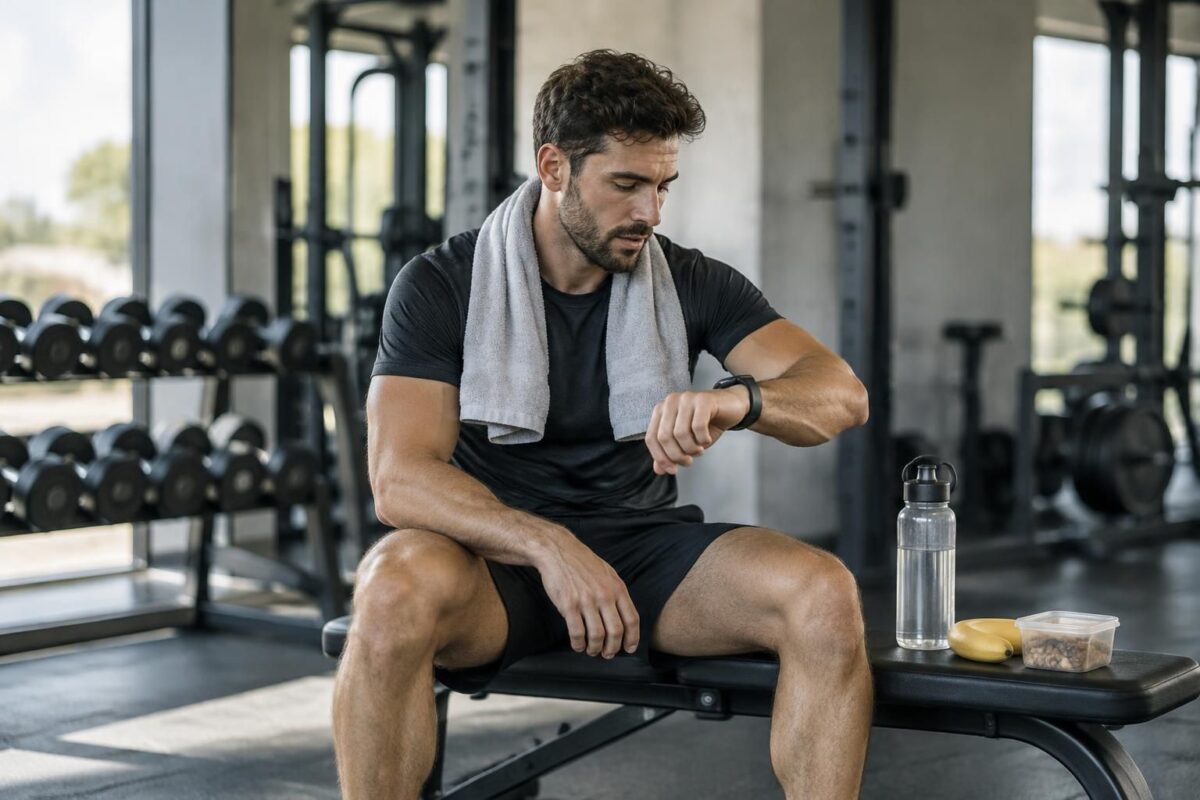
However, waiting a long time before eating can be less practical if you trained fasted, have two workouts back to back, or your next meal is a long way off. In these cases, a snack with protein and carbohydrates can help meet your needs without rushing.
Muscle soreness and recovery time: guideposts, not a stopwatch
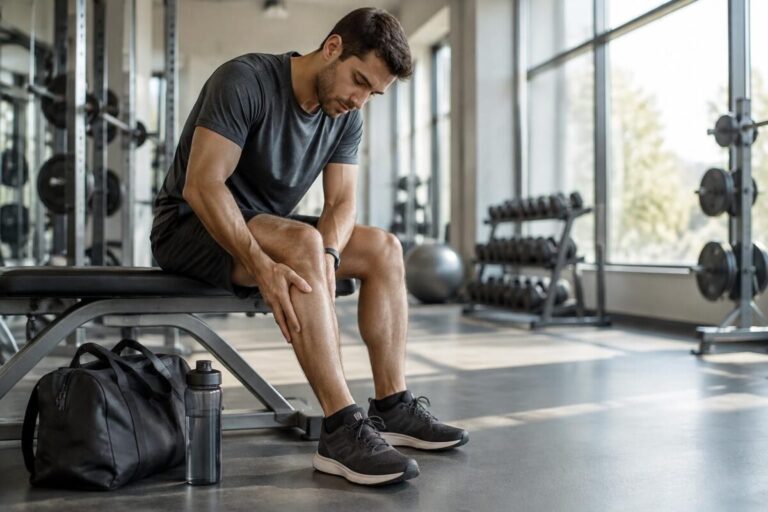
Muscle soreness alone doesn’t prove that your workout was effective. It can appear after an unusual effort and last for a few days, but its intensity varies from person to person and from one exercise to another.
If your muscles remain sore, opt for light movement or train another area. Sharp pain, unusual weakness, or discomfort that gets worse won’t be fixed by pushing through: ease off and seek advice from a healthcare professional if needed.
Post-workout nutrition: what really matters
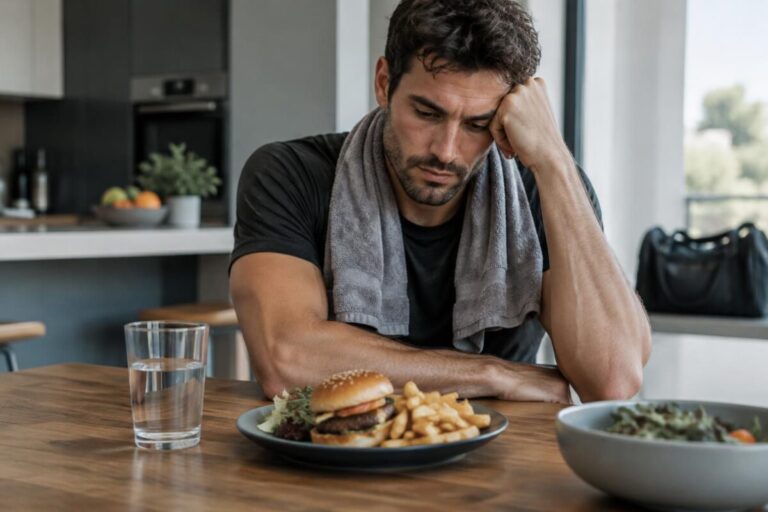
Imagine Lina, who finishes her workout at 6 p.m. and has dinner around 8 p.m. If her meal contains protein, starchy foods, and vegetables, she generally doesn’t need to rush out and buy a recovery drink as soon as she leaves the gym.
Her friend, on the other hand, works out early in the morning without eating and doesn’t have lunch until noon. A post-workout snack may be helpful in that case. The difference comes down to context and overall intake, not a deadline that’s the same for everyone.
| Situation after your workout | Helpful response | Why |
|---|---|---|
| Complete meal coming up soon | Eat normally at mealtime | No need to rush if you’ll meet your nutritional needs. |
| Meal is a long way off or you trained fasted | Have a snack with protein and carbohydrates | It helps you meet your recovery needs. |
| Intense workout or hot weather | Drink and gradually replenish your energy | Water and energy losses may be greater. |
| Persistent fatigue and declining performance | Reduce your training load and review your sleep and diet | A recurring imbalance can hinder progress. |
Overtraining: when waiting isn’t the problem
Inadequate recovery is more often caused by a combination of factors: workouts too close together, insufficient sleep, too little food, or high stress. Delaying a meal by a few hours doesn’t cause overtraining on its own, but ignoring persistent fatigue can fuel a downward spiral in athletic performance.
Rest doesn’t necessarily mean staying still. A walk or gentle activity may be fine if it doesn’t aggravate the pain or turn your recovery day into an extra workout.
Three steps to recover better after training
- In the hours that follow, drink according to your thirst and have a balanced meal when it fits into your day.
- In the evening, prioritize getting enough sleep and avoid putting intense demands on muscles that are still tired.
- At your next workout, assess your energy, soreness, and performance, then adjust the intensity if needed.
Remember: you don’t have to beat the clock after exercise. Consistent post-workout nutrition, sleep, and adequate recovery time do far more than rushing to eat.
How long should I wait to eat after a workout?
You can eat whenever it fits into your day. If a complete meal is coming in the next few hours, you generally don’t need to have a snack right away.
Do I need to have protein right after training?
Not necessarily within minutes of finishing. Getting enough protein throughout the day matters more, with a meal or snack after your workout depending on your schedule.
Does muscle soreness mean poor recovery?
Not necessarily. It can happen after a new or intense effort, but not being sore doesn’t mean your workout was ineffective. Sharp or worsening pain calls for greater caution.
What should I do if my performance declines for several days?
Review your sleep, food intake, and how your workouts are scheduled. Temporarily reduce your training load if needed, and consult a healthcare professional if fatigue or symptoms persist.
I hope you found these tips helpful. See you soon! — Orvane