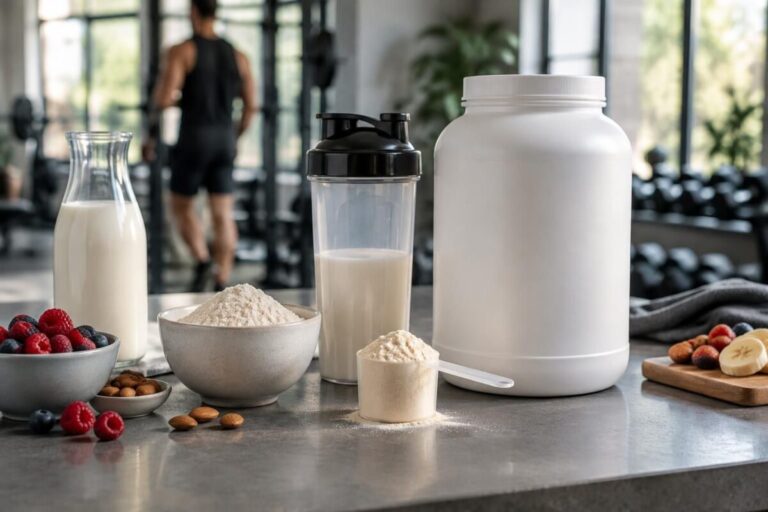
Sports supplements: BCAAs after a workout, real benefits or money down the drain?
Hi, it’s Orvane.
For most athletes who consume enough protein, BCAAs after a workout offer few additional benefits and may not justify their cost. These amino acids can contribute to protein synthesis, but they don’t replace a balanced diet or the other essential amino acids.
The right choice depends mainly on your daily intake and what you eat after training. Here’s how to avoid paying for an effect you can already get from a well-planned meal or snack.
What to do right now
- Check how much protein you consume over the course of a full day.
- After your workout, choose a meal or snack that also provides complete protein.
- Compare the cost of BCAAs with that of protein-rich foods or protein powder.
- Don’t confuse muscle soreness with a lack of BCAAs: recovery depends on several factors.
- Use sports supplements to meet a specific need, not out of habit.
For more information, see this overview of BCAAs after exercise, then these tips on how to recover faster after training.
How effective are BCAAs after a workout? What the supplement can really do
BCAAs are three essential amino acids: leucine, isoleucine, and valine. Leucine contributes to triggering protein synthesis, but building muscle also requires the other essential amino acids.
That’s the limitation of a product made up solely of BCAAs: it provides some of the building blocks, but not all of them. If your diet already meets your protein needs, adding BCAAs after exercise generally does not lead to an obvious additional benefit for muscle recovery or muscle growth.
The key factor remains your overall protein intake, spread throughout the day. For many active people, around 1.4 to 2 g of protein per kilogram of body weight per day is a common guideline, to be adjusted based on your profile, goals, and medical circumstances.
BCAAs, complete proteins, or a meal: a practical comparison
BCAA powder is easy to drink, but it doesn’t offer the same nutritional profile as a complete protein. A meal featuring eggs, dairy products, soy, meat, or fish provides a range of amino acids, along with other nutrients.
Post-workout nutrition doesn’t need to be complicated or consumed within minutes of your last rep. If you’re planning to have a balanced meal in the next few hours, you can simply eat at your usual time.
| Option | Main benefit | Limitation |
|---|---|---|
| BCAAs alone | Convenient to carry | Do not provide all the essential amino acids |
| Complete protein | Provides a more complete profile | Does not replace a varied diet |
| Balanced meal | Combines protein with other nutrients | Requires a little planning |
A shake can be handy when it’s difficult to eat right after training. To choose between these options based on your schedule, also check out the differences between a post-workout shake and a solid meal.
A common pitfall: buying BCAAs without checking your intake
A common mistake is to blame a lack of BCAAs for a tough workout, then buy a tub without looking at the rest of your diet. However, poor recovery may also be linked to too little sleep, excessive training volume, or insufficient energy intake.
Here’s a concrete example: Lina trains four times a week and already eats protein-rich foods at several meals. Adding a BCAA drink after every workout is likely to mostly increase her expenses without addressing any actual deficiency.
On the other hand, if you train fasted or can’t have a full meal for several hours, a source of complete protein may be more appropriate. Alternatives to BCAAs include high-protein yogurt, milk, soy, eggs, or protein powder suited to your needs.
A simple three-step approach
- Review your meals. For a few days, note the protein sources you eat and check whether your daily intake aligns with your goal.
- Choose an option that suits your workout. If you can eat, opt for a balanced meal. If you’re in a hurry, a snack or complete protein may be more useful than BCAAs alone.
- Assess the results and the cost. Monitor your energy, recovery, and meal consistency for several weeks before adding a supplement.
In short: BCAAs aren’t automatically useless, but they’re rarely a priority when your diet already meets your needs. Before buying them, weigh their actual benefits against their cost and the more complete options available.
Should I take BCAAs immediately after a workout?
No. You don’t have to take them right after training. A meal or snack containing complete protein may be suitable, depending on your intake and schedule.
Do BCAAs help build muscle?
They don’t guarantee muscle growth. Progress depends mainly on appropriate training, sufficient energy intake, and a suitable amount of complete protein.
Are BCAAs useful if I eat little protein?
They aren’t a complete solution because they contain only three essential amino acids. Instead, try to improve your intake with protein-rich foods or a source of complete protein.
What should I choose instead of BCAAs?
Depending on your situation, a balanced meal, high-protein yogurt, milk, soy, eggs, or complete protein powder may be more suitable alternatives.
I hope you found these tips helpful. See you soon! — Orvane