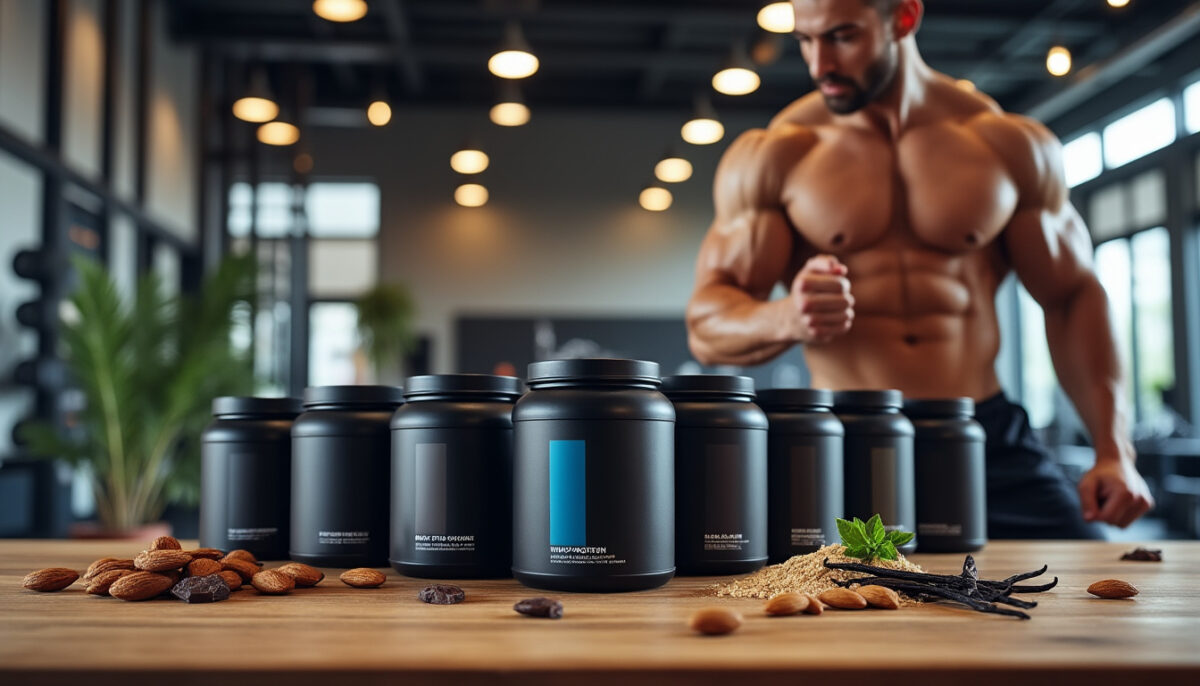
Sports performance: Top 10 best whey protein powders—should you follow?
Hello, it’s Orvane. The best whey is the one that meets a genuine need, that you tolerate, and whose composition can be verified; a top 10 list isn’t enough to choose it. Concentrate, isolate, or native: start by reading the label and reviewing your current diet before paying for a performance promise.
What to do right now
- Choose a whey with a flavor profile you enjoy so you’ll use it regularly.
- Compare the amount of protein per serving, without treating the BCAA logo as a deciding factor.
- Check the quality of the ingredients, including where the milk comes from and whether there are unnecessary additives.
- Try a small amount before investing in a large quantity to avoid disappointment.
- Remember to adjust your nutrition tracking based on your tolerance and results.
And what about the “best whey according to 60 Millions de consommateurs”?
This guide does not reproduce a laboratory test by the magazine. Without the original publication, its protocol, date, and the exact products tested, a ranking reposted by another website is not enough to award a “best product” label. Always check the source before following a podium ranking.
How can you read a top 10 whey list with a critical eye?
A comparison can help you identify products, provided it specifies the methodology, commercial links, and date. Taste, price, or protein content alone do not prove that a powder will improve your results more.
Whey is a protein derived from milk. Isolate is generally more heavily filtered and lower in lactose than concentrate, but that does not guarantee that everyone will tolerate it. The terms “native” or “cold microfiltered” do not, by themselves, demonstrate that it will lead to better progress.
Ten criteria for comparing two whey products
| Criterion | What to check | What to compare | Pitfall | Decision |
|---|---|---|---|---|
| Need | Usual meals | What the powder supplements | Automatic purchase | Check before buying |
| Protein | Per 100 g and per serving | Amount actually consumed | Confusing powder with protein | Compare on the same basis |
| Type | Concentrate or isolate | Clearly identified formula | Calling everything native | Read the ingredients |
| Lactose | Stated amount | Personal tolerance | Assuming it contains no lactose | Ask if not specified |
| Allergens | Milk and other traces | Individual compatibility | Confusing allergy with intolerance | Avoid any known allergen |
| Composition | Full list | Identifiable ingredients | Hidden stimulant blend | Prefer clear labeling |
| Traceability | Manufacturer and batch | Identifiable product | Anonymous seller | Check contact details |
| Testing | Dated report and scope | What was tested | Treating a logo as a blanket guarantee | Read the document |
| Price | Cost for the same amount of protein | Like-for-like comparison | Price per tub alone | Calculate for an equal serving |
| Use | Taste and tolerance | Practical use | Buying a large bag straight away | Choose a small size if needed |
Choosing the best whey for your athletic profile
If your diet already meets your needs, whey may be unnecessary. If convenience makes a powder worthwhile, compare a simple concentrate with an isolate based on your budget and tolerance. If you are allergic to milk proteins, whey is still a dairy product, even if it is low in lactose.
A high percentage is no guarantee of muscle gain without fat. Choose a serving based on your total intake and training, and consult a dietitian if needed.
3-step process for choosing the right whey
- Assess your needs: bulking, cutting, or recovery?
- Read the composition, especially the protein content and whether it contains lactose or additives.
- Try it for 1–2 weeks, monitoring your digestion and performance.
Comparison example: 30 g of a powder that is 80% protein provides 24 g of protein; 30 g at 90% provides 27 g. Compare the cost for an equivalent amount of protein rather than just the price of the bag. This calculation is not a substitute for a quality assessment.
The real role of whey protein in your sports nutrition
Whey is a convenient way to get protein, not a requirement for making progress. Everyday foods can serve the same purpose while providing other nutrients. If you have kidney disease or a particular medical condition, seek advice before increasing your intake.
Remember this sporting quote: “Results come to those who nourish their bodies wisely.” (Anonymous)
Avoid piling on supplements: each product should meet an identified need without replacing a varied diet.
Tips to avoid disappointment with a poor-quality whey
- Avoid whey products with additives that increase the risk of digestive problems.
- Take the source of the milk into account, as it is often an indicator of quality.
- Avoid products that are not transparent about their lactose content or filtration methods.
- Don’t buy several powders if just one product meets your needs.
- Stay properly hydrated for your training.
For more information: Australian Institute of Sport fact sheet on isolated proteins. In competition, batch testing for banned substances can reduce certain risks, but cannot guarantee the absence of every contaminant.
What is the difference between whey isolate and concentrate?
Isolate is purer, with a protein content often above 90% and less lactose, while concentrate contains more carbohydrates and fat, making it useful for tighter budgets or less demanding phases.
Are all whey products suitable for people with lactose intolerance?
No. Check the lactose content and your tolerance. Isolate is not automatically lactose-free, and no whey product is suitable for someone with a milk protein allergy.
Should you take whey only after training?
No. Whey can be used at different times of day to meet your protein needs, including in the morning or between meals, depending on your routine and goals.
Does more expensive whey mean better performance?
Not necessarily. Price sometimes reflects quality, but it can also reflect marketing or additives. The key is to find whey that suits your needs and that you tolerate well.
How can you incorporate whey into an effective nutrition plan?
Plan your intake around your training, adjust the serving to your recommended daily intake, and pair it with a balanced diet to get the most out of whey.
Thank you for your interest; Orvane