Sports performance: 10 tips for eating better before exercise
Hello, it’s Orvane!
To eat better before exercising, choose an easy-to-digest meal with carbohydrates, time it around your workout, and drink regularly.
A good pre-workout meal won’t guarantee a record-breaking performance, but it can help you start with energy and limit discomfort. Here are ten simple tips for tailoring what you eat before exercise to your needs, without looking for a miracle food.
Good habits to adopt before your workout
- Plan your main meal about 2 to 3 hours before exercising.
- Choose a source of carbohydrates that you digest well.
- If your last meal was a while ago, have a small sports snack 30 to 90 minutes beforehand.
- Drink regularly, without gulping down a large amount just before you leave.
- Avoid trying a new food on competition day.
The right choice depends mainly on the duration and intensity of the exercise, as well as your digestive tolerance. A relaxed 30-minute session doesn’t require the same preparation as an interval workout or a long bike ride.
10 tips for eating better before exercise
1. Make carbohydrates the foundation for sustained exercise
Carbohydrates help fuel your muscles, particularly through glycogen stored in the body. Before an intense or prolonged workout, stick with familiar foods such as bread, rice, pasta, or oats.
For example, rice served with chicken and cooked vegetables can work well several hours before training. For a short, easy workout, your usual meal is often enough: there’s no need to eat more just for the sake of it.
2. Adjust the timing to suit your digestion
A large meal just before exercise can make you feel heavy. Figure out what timing works for you: some people feel fine after two hours, while others prefer to wait nearly three hours.
If you run at 6 p.m. and have lunch at noon, a light snack in the middle of the afternoon may help. The best timing is whatever lets you get started without feeling hungry or too full.
3. Have a sports snack if needed
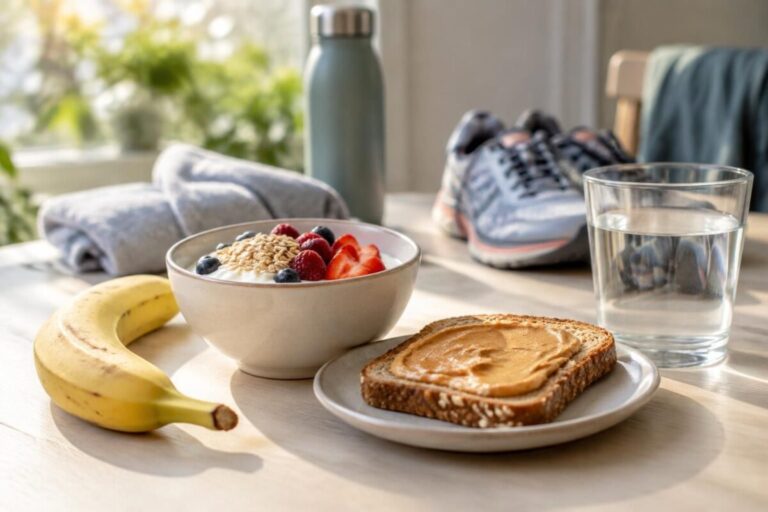
If it’s been several hours since your last meal, a small, easy-to-carry snack can help. A banana, applesauce with a few plain crackers, or a slice of bread with a little honey are simple options.
On the other hand, if you’ve eaten recently and your workout is moderate, a snack isn’t essential. Pay attention to your hunger and energy instead of following an automatic rule.
4. Choose familiar foods on competition day
A competition isn’t the ideal time to try a new gel, an unfamiliar drink, or an unusual breakfast. Stress can already affect digestion, so add as few variables as possible.
Test your meals during key training sessions. That way, you’ll know whether porridge, bread, or a banana works for you before repeating the same routine on race day.
5. Go easy on very high-fat foods just before exercise
Fried foods, rich sauces, and very fatty meals can slow digestion for some people. You don’t need to ban them from your diet, but a light, familiar meal is often more comfortable before a demanding workout.
A little oil in a dish is different from a meal that’s very high in fat. The amount and your tolerance matter just as much as the food itself.
6. Adjust fiber to suit your digestive comfort
Raw vegetables, legumes, and high-fiber grains are great choices in your everyday diet. However, just before a run or interval session, they may cause discomfort for athletes with sensitive digestion.
In the hours before an intense workout, opt for cooked vegetables and easier-to-digest starchy foods if needed. There’s no need to cut out fiber for the entire day.
7. Add a source of protein without making the meal too heavy
Eggs, fish, chicken, tofu, or a plant-based yogurt can round out your meal. Protein contributes to a balanced diet, but it doesn’t replace carbohydrates as the main source of energy during sustained exercise.
A moderate portion is usually enough before training. A very large meal rich in protein and fat may be less comfortable to digest just before you exercise.
8. Hydrate gradually
Drink regularly throughout the day and take a few sips before you start if you feel the need. The weather, workout duration, and how much you sweat all affect your needs: the same amount isn’t right for everyone.
Avoid drinking excessively in just a few minutes. For a short workout in mild weather, water is usually enough; longer workouts or those in hot weather require a more personalized approach.
9. Don’t rely on fasted exercise to burn more calories
Working out fasted doesn’t guarantee better weight loss or better physical performance. Some people enjoy gentle activity in the morning without eating, but an intense workout may be harder under those conditions.
If you choose this option, pay attention to how you feel and don’t make it an obligation. If you feel unwell, unusually tired, or have a health condition, stop your workout and seek advice from a professional.
10. Put together a breakfast that works with your start time
If you train in the morning, a breakfast of bread or oats, fruit, and a source of protein may work for you, depending on the timing and your tolerance. If you’re heading out soon after waking up, a full meal may feel uncomfortable.
In that case, start with a small portion of something familiar, or plan to eat after your workout if it’s short and easy. For a long or intense session, it’s better to plan your energy intake than to set out without a strategy.
What pre-workout meal should you choose based on timing?
Your plate can be simple. The closer you are to starting, the smaller and easier to digest your portion should be; a few hours beforehand, it’s generally easier to plan a complete meal.
| Time before exercise | Example of a food or meal | Keep in mind |
|---|---|---|
| 2 to 3 hours | Rice, fish or tofu, cooked vegetables | A complete meal, suited to your appetite and tolerance. |
| 1 to 2 hours | Bread and yogurt, or a small serving of oats | Reduce the amount if you digest food slowly. |
| 30 to 60 minutes | Banana or applesauce with a few plain crackers | A light snack may be enough if you’re hungry. |
| Less than 30 minutes | A few sips of water; possibly a small bite of something familiar | Avoid forcing yourself to eat a full meal. |
These guidelines don’t replace personal experience: the same snack may work well for cycling but cause discomfort when running. To fine-tune your sports nutrition, keep track of what you eat, when you eat it, and how you feel during a few workouts.
Mistakes that drain your energy before a workout
A classic pitfall is copying another athlete’s routine without considering your own schedule. A meal that works well before a strength-training session may feel uncomfortable before a run, when the impact puts more strain on your stomach.
Another mistake is cutting out fats or carbohydrates completely for fear of “eating too much.” The goal isn’t to pile food onto your plate or restrict yourself at all costs, but to find a way of eating before exercise that supports your workout and feels comfortable.
A simple three-step approach
- Assess your workout: note its duration, intensity, and start time.
- Choose what to eat: have a complete meal several hours beforehand, or a small snack if your last meal was a while ago.
- Evaluate the result: notice your energy and digestion, then make gradual adjustments next time.
This approach turns nutrition advice into practical habits without prescribing a one-size-fits-all menu. An effective routine is, first and foremost, one you can repeat comfortably.
Frequently asked questions about eating before exercise
How long should you wait after a meal before exercising?
A wait of around 2 to 3 hours after a large meal works for many people. After a light meal or small snack, a shorter wait may be enough: adjust based on your digestion and the type of exercise.
What should you eat before exercising when you’re short on time?
If you’re hungry, choose a small, easy-to-digest option, such as a banana, applesauce, or a few plain crackers. Avoid having a large meal just before you start.
Is a banana a good snack before training?
Yes, it provides carbohydrates and is a convenient option for many athletes. However, it isn’t essential: choose a food that suits you and that you tolerate well.
Do you need to drink an energy drink before every workout?
No. For a short or moderate workout, water is usually enough. A drink containing carbohydrates may be useful in some situations, particularly during long workouts, but the choice depends on the duration, intensity, and individual needs.
Thanks for reading! Feel free to share your observations in the comments. — Orvane