Sports nutrition: not eating after exercise—a costly mistake?
Hello, Orvane here.
Not eating after exercise isn’t necessarily a mistake, but it can slow your recovery if you train on an empty stomach or your next meal is a long way off. A few simple choices are enough to replenish your stores and support your muscles.
It all depends on the intensity of your workout, what you eat throughout the day, and how long it is until your next training session. The goal isn’t to eat at exactly the right minute, but to give your body what it needs.
Good habits to adopt after exercise
- Drink gradually after your workout, especially if you sweated a lot.
- Include a source of protein, such as eggs, yogurt, tofu, or fish.
- Add carbohydrates if your workout was long or intense, or if another training session is coming up soon.
- Have a snack after exercise if your meal is still a while away and you’re hungry.
- Don’t feel guilty if you’re not hungry right away: a balanced meal later may be perfectly fine.
To choose between regular foods and a drink, compare the options in this guide to eggs, rice, yogurt, or a shake after exercise. And if you’re unsure about timing, this guide covers the ideal time for a post-workout meal.
Not eating after exercise: when it becomes a trap
A common trap is believing you absolutely have to eat a meal as soon as you finish your last rep or, conversely, that ignoring your hunger has no consequences. The famous metabolic window isn’t a deadline of just a few minutes: your total intake throughout the day matters a lot, even though eating after a workout can be convenient.
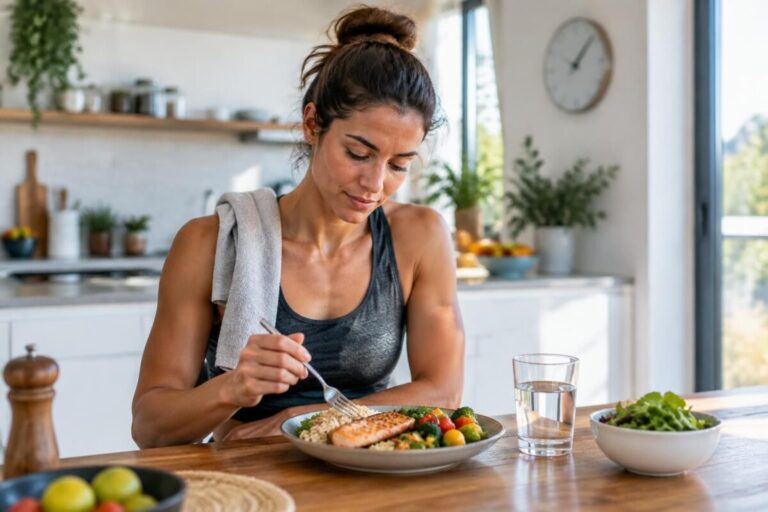
After a demanding workout, a post-workout meal helps with glycogen replenishment and provides protein after exercise to support tissue repair. If you ate very little before your workout, having a meal in the hours afterward is generally a good idea. If you had a full meal before your workout and will be eating again soon, there’s less urgency.
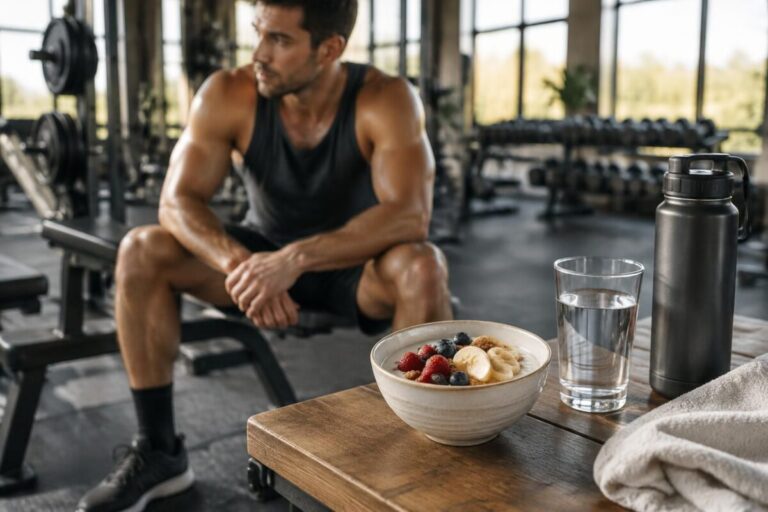
Imagine Lina, who finishes an intense cycling session in the late afternoon and doesn’t have dinner until three hours later. A snack of yogurt and a banana can tide her over; after an easy ride followed by dinner soon after, she can simply drink and wait for her meal. The context guides the choice, not a one-size-fits-all rule.
Practical guidelines for a post-workout meal
For most people, a meal with a serving of protein and a source of carbohydrates is a simple starting point. Depending on your body size and training, around 20 to 40 g of protein at a meal can be a practical guideline, without replacing your individual needs.
Carbohydrates are especially useful after a long or intense effort, or when you need to train again soon. Recovery after exercise also depends on hydration: drink according to your thirst and fluid losses, rather than trying to make up for them all at once.
| Situation | Practical option | Priority |
|---|---|---|
| Light workout, meal soon | Your usual meal at the planned time | Overall balance and hydration |
| Intense workout, dinner a while away | Yogurt and fruit, or a simple sandwich | Protein and carbohydrates |
| Long workout, another session soon | A carbohydrate-rich meal with a source of protein | Energy replenishment and recovery |
| Little appetite after exercise | A drink or easy-to-digest snack, followed by a meal later | Appropriate intake and digestive comfort |
A 3-step process for better recovery
- Assess your workout. After a short, moderate effort, your needs aren’t the same as after a long ride or a very intense workout.
- Consider how long it is until your next meal. If it’s soon and you ate well before your workout, wait without worrying. If it’s a while away, choose a simple snack.
- Keep it simple. Pair a source of protein with carbohydrates when the workout calls for them; remember to drink, too. This routine supports muscle recovery without turning every workout into a math problem.
Nutrition mistakes often come from extremes: always skipping a meal despite being hungry, or believing a supplement is essential. An effective sports diet is consistent, suited to your goals, and compatible with your daily life.
Frequently asked questions about eating after exercise
Do you need to eat immediately after a workout?
No. It is generally not necessary to eat within minutes of finishing. If you had a meal before training and your next meal is soon, you can wait; a snack is useful if there is a long gap or the workout was demanding.
What should I eat after exercise if I’m not hungry?
Drink according to your thirst and, if it suits you, choose an easy-to-consume option such as drinkable yogurt or a piece of fruit. You can have a full meal later without forcing yourself to eat right away.
Is protein after exercise essential?
Protein contributes to muscle repair and maintenance, but it does not need to be consumed in the form of a shake. Foods such as eggs, dairy products, tofu, or legumes can work well.
Should I add carbohydrates after every workout?
Not necessarily. They are especially useful after a long or intense effort, or when another workout is coming up soon. For a light workout followed by a balanced meal, your usual eating habits may be enough.
I hope you found these tips helpful. See you soon! — Orvane