Muscle recovery: hot or cold bath—which one really helps?
Hi, it’s Orvane. After exercise, neither a hot bath nor a cold bath is best in every situation: the choice depends on your goal, your tolerance, and your health. There is no general rule of “cold for 48 hours, then hot.” Relieving the feeling of muscle soreness does not mean the muscle repairs faster.
What to do right now
- Start with sleep, meals, fluids, and spacing out your training sessions.
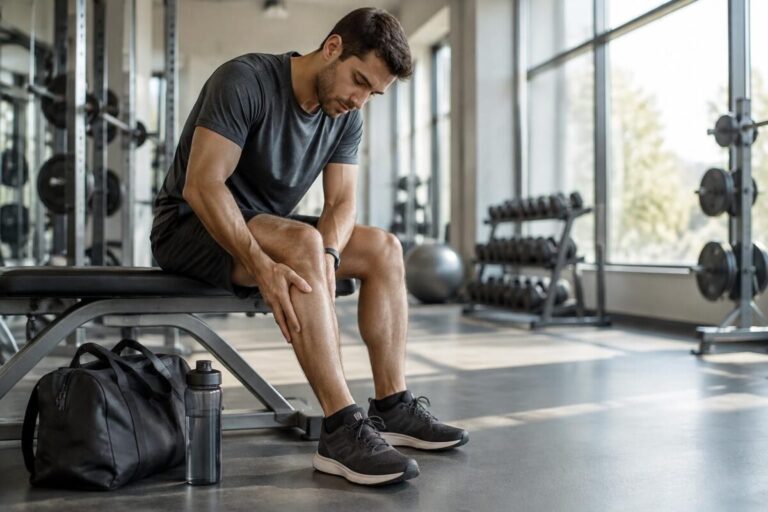
- Distinguish ordinary muscle soreness from new or localized pain.
- Don’t improvise an ice bath to treat an injury.
- If you choose a bath for comfort, avoid extreme temperatures and make sure you can get out easily.
- Ask for advice before cold-water immersion, especially if you have a heart or circulatory condition or take medication.
The Australian Sports Commission’s recovery guidelines place immersion among several tools to choose from depending on the athlete and the situation. A bath remains an optional add-on.
Cold bath: an occasional tool, not a mandatory reflex
Cold can change how pain is perceived and may be used in some sports settings. Its effects on muscle soreness and performance vary across studies: there is no basis for promising that it will halve soreness for everyone.
If your goal is to build muscle, avoid making cold-water immersion a routine immediately after every workout. A trial involving eleven participants observed less favorable muscle adaptations with repeated cooling; this does not mean that an occasional bath will undo your progress.
Three checks before considering cold immersion
- Clarify your goal with a professional: occasional comfort, closely spaced competitions, or strength training.
- Check individual risks, supervision, and whether you can get out easily.
- Don’t enter cold water abruptly, and don’t try to push through breathing difficulties or feeling unwell.
Hot bath: comfort without promises of healing
You can choose pleasantly warm water to relax; there’s no need to wait exactly 48 hours after every workout. It does not guarantee faster repair and does not treat a recent injury. Feeling comfortable and objectively measured recovery are not the same thing.
For example, after a light workout with no unusual pain, you might prefer a comfortable shower or bath to wind down at the end of the day. After exercising in the heat, feeling unwell, or experiencing new pain, start by assessing the situation rather than adding a thermal stressor.
3 steps for a comfortable bath
- Choose a comfortable temperature without aiming for maximum heat.
- Make sure you can get out easily, and stop if you feel dizzy or weak.
- Don’t use a bath to mask unusual pain before returning to sports.
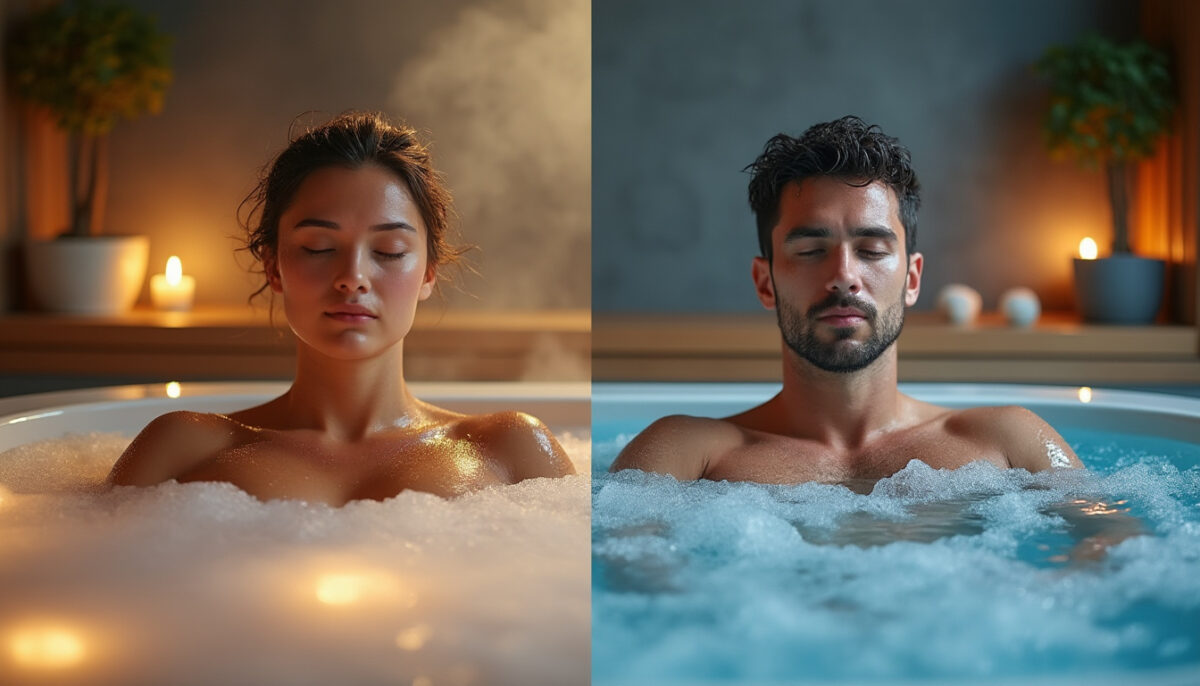
A clear comparison of cold and hot baths
| Criteria | Cold bath | Hot bath |
|---|---|---|
| Possible purpose | Occasional comfort in a supervised setting | Relaxation and comfort |
| Timing | Depends on your goal; avoid making it a reflex after every strength workout | Depends on your tolerance; there is no universal 48-hour rule |
| Limitation | Risks associated with cold and possible effects on adaptations | Does not prove faster healing |
| Protocol | Individualized; no endurance challenge | Comfortable, without extreme heat |
Good habits for your situation
Acute pain, significant swelling, or difficulty using a limb calls for professional advice, not an automatic choice between hot and cold. Very severe muscle pain, unusual weakness, or dark urine after exercise requires prompt medical evaluation.
Alternating hot and cold is not necessary for good recovery. If you’re unsure, start with the basics and choose a comfortable option rather than a protocol that is difficult to tolerate.
Is an ice bath essential after every workout?
No. Its value depends on the context, and it does not replace the basics. Repeated use immediately after strength training may hinder some adaptations.
Can you combine a hot bath and stretching?
You can do gentle movements if you tolerate them, without forcing anything or stretching an injured area. This combination does not guarantee faster recovery.
What are the risks of thermal shock?
Cold-water immersion can abruptly affect breathing, heart rate, and blood pressure, even in a fit person. A maximum time limit is not enough to make the practice safe.
Is Epsom salt effective in baths?
Specific benefits for recovery and sufficient absorption of magnesium through the skin have not been established. Feeling comfortable in the bath does not demonstrate that the salt is effective.
For more information: trial on repeated cold exposure after strength training, RNLI guidance on the risks of cold water shock, and CDC guidance on muscle symptoms that require medical care.
Thank you for your interest; Orvane