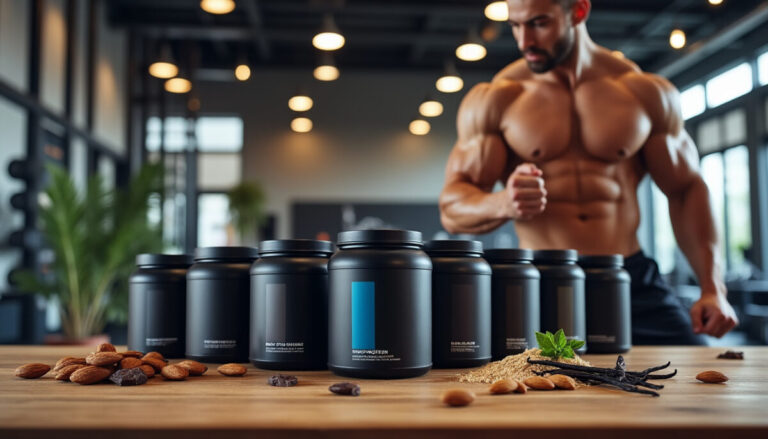
Sports performance: which whey ranking can you trust?
Hi, it’s Orvane. To choose a reliable whey ranking, compare the labels, digestibility, traceability, and actual cost per serving: no brand is right for everyone. In 2026, five options stand out for different reasons, but this assessment is based on the information available, not on an independent taste test. The right choice depends on your goal, your lactose tolerance, and your budget. Whey protein can help you meet your intake needs; it is no substitute for a suitable diet or regular training.
What to do right now
- Choose your goal: bulking, cutting, or occasional supplementation.
- Check the protein content in the nutrition facts table, per 100 g.
- Compare the ingredient list and type of whey: concentrate, isolate, or native.
- If lactose bothers you, look at isolates and whether lactase is included.
- Calculate the cost per serving of protein, not just the price of the tub.
To refine your choice, see this detailed whey comparison and this selection of proteins for athletes.
Which whey ranking really deserves your trust?
A reliable ranking explains its criteria and distinguishes label data from personal opinions. Protein quality cannot be summed up by a percentage printed in large type: check the nutrition facts, the ingredient profile, and the content for each flavor, since cocoa or flavorings can affect the figures.
The selection below highlights different profiles. The prices shown are estimates based on the information provided; they may vary depending on the size, seller, and flavor. The ratings are not presented as the results of independent tests.
| Product | Profile | Nutrition reference | Key takeaway |
|---|---|---|---|
| Harder – Whey Harder | Native isolate | Up to around 92% protein, depending on the flavor | French milk stated, cold filtration; premium price of around €65 |
| XNative – Whey Native | Native whey | Around 73 to 78% protein | Good balance of price, simplicity, and mixability; around €40 |
| Black Protein – Arkens | Protein blend | Around 88 to 89 g of protein per 100 g | High-protein profile and formula designed for athletes; around €55 |
| AM Nutrition – Pure Whey Isolat | Isolate with lactase | Around 80 to 91 g of protein, depending on the flavor | An option to consider if lactose bothers you; around €43 |
| Black Protein – Clear Whey Isolate | Isolate in a clear drink | Around 75 to 76% protein | Light, fruity texture, less like a milkshake; around €55 |
These products do not make up a universal podium. Harder focuses on its raw ingredients and traceability, XNative targets value for money, while Clear Whey offers a light drink. Always check the label for the flavor you’re buying.
How to compare nutrition facts
Protein content doesn’t tell the whole story
Check the protein per 100 g in the nutrition facts table. A figure in the ingredient list may refer to the proportion of a concentrate in the recipe, rather than the actual protein content of the powder. Flavors matter too: cocoa and thickeners can reduce the proportion of protein compared with an unflavored version.
To compare two tubs, use this simple calculation: tub price ÷ total amount of protein, then multiply by 100. This gives you the cost of 100 g of protein, a more useful reference than the price per kilo of powder.
Isolate, concentrate, or native: choose what suits your needs
A whey concentrate is often enough if you digest milk well and want to keep costs down. An isolate generally contains less lactose and fat. Native whey is extracted directly from milk; this process may appeal to athletes who prioritize origin and processing, but it does not by itself guarantee better results.
If you’re cutting, compare the protein, carbohydrate, and fat content per serving. For bulking, your total daily calorie and protein intake matters more than the type of whey you choose.
Three steps to choose wisely
- Step 1: define your needs and budget. Don’t buy a premium isolate if a concentrate already meets your expectations.
- Step 2: check the content per 100 g, ingredients, allergens, and amino acid profile, when available.
- Step 3: compare the actual cost and try a small amount if you’re not yet sure about your tolerance or the flavor.
If you’re cutting or sensitive to lactose, start by looking at isolates and the information on the label. If you’re on a tight budget and digest dairy normally, a simple whey concentrate may be a more sensible choice.
A quick anecdote sums up the packaging trap: one athlete first chooses a tub based on its listed price, then notices that the chocolate flavor contains less protein than the vanilla version. By recalculating the cost per serving, they can finally compare equivalent products.
“The best supplement is one that fits into a routine you can stick to.” Consistent intake supports muscle recovery, but a shake can’t make up for insufficient sleep or unbalanced meals.
Traceability, testing, and consumer confidence
A whey ranking deserves your trust when it states its sources, criteria, and the limitations of its comparisons. A brand that provides details about the milk’s origin, manufacturing, and certificates of analysis gives you more information to assess its transparency. This does not replace checking the product you have in your hands.
If you compete in events with testing, look for a recognized anti-doping certification and check that it applies to the product and the relevant batches. A label does not automatically tell you anything about taste, digestibility, or athletic performance.
Keep these points in mind when evaluating a whey product:
- The nutrition facts are clear and consistent with the ingredients.
- The type of protein is stated without misleading terminology.
- Traceability and quality control information is available.
- The price is compared based on an equivalent amount of protein.
Athletic performance is built first and foremost through training, nutrition, and recovery. Whey is a practical tool, not a shortcut.
Frequently asked questions about whey rankings
Which whey should beginners choose?
A whey concentrate may be suitable if you digest lactose well and want to keep costs down. Compare the protein per 100 g and the ingredients in your chosen flavor.
Which type of whey should you choose when cutting?
An isolate may be a good option because it often contains less carbohydrate, fat, and lactose than a concentrate. Check the values per serving rather than relying only on the product name.
How much whey should you take after training?
A serving providing around 20 to 30 g of protein is a common guideline, depending on your diet and needs. Your total daily intake matters more than the exact timing.
Does native whey necessarily build more muscle?
No. Native whey is distinguished mainly by its extraction process. Progress depends in particular on training, total protein intake, energy intake, and recovery.
Thanks for your interest; Orvane